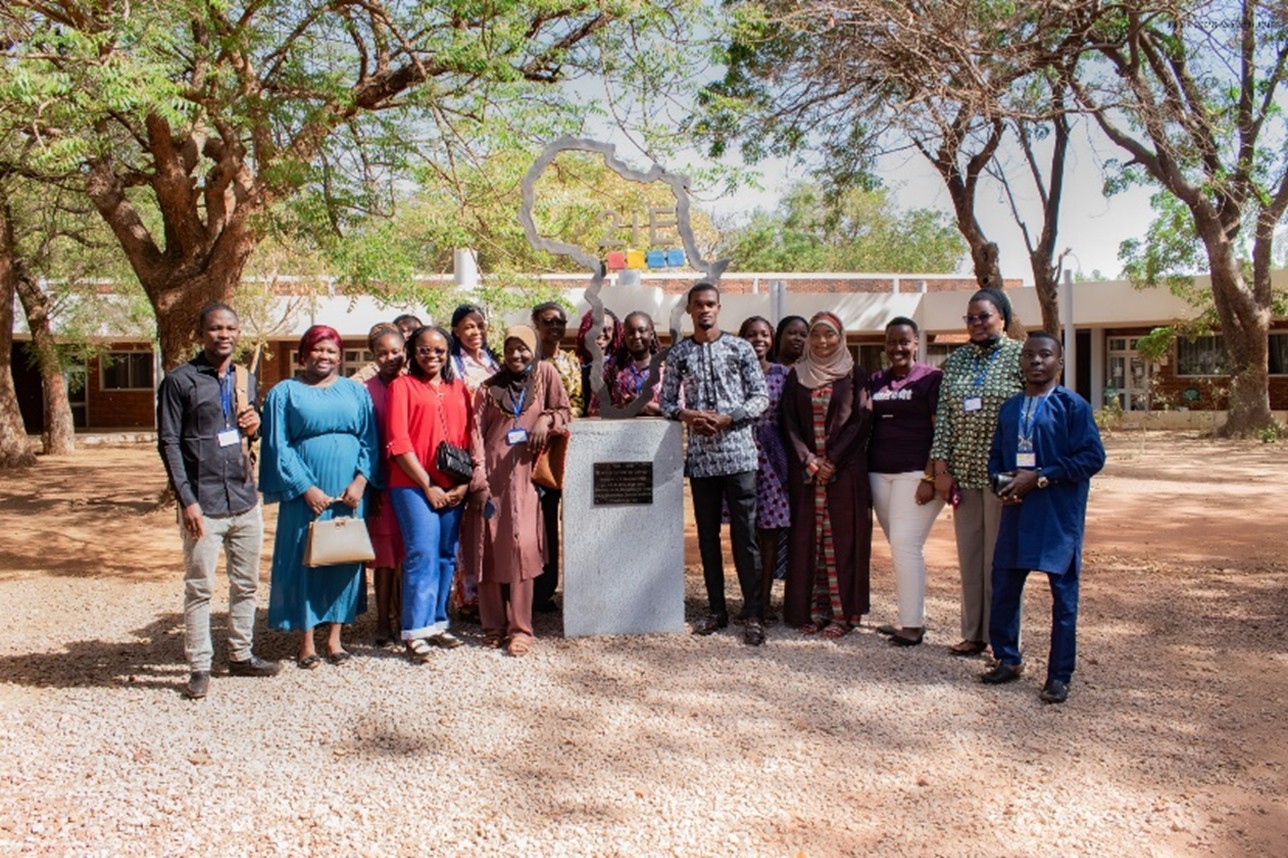
The 2iE Institute welcomes a new cohort of students to its Master’s Program in Non-sewered Sanitation

The International Institute for Water and Environmental Engineering (2iE) welcomed a new cohort of students to its Master’s Program in Non-sewered Sanitation on March 6, 2026, in Ouagadougou. This program is offered as part of the Global Sanitation Graduate School Regional Hub for West, Central and Indian Ocean Africa (GSGS RH WCIOA).
This sixth cohort comprises twenty students from ten African countries (Benin, Burkina Faso, Burundi, Cameroon, Ivory Coast, Mali, Niger, Democratic Republic of Congo, Senegal, and Chad), including seventeen women, demonstrating the program’s commitment to inclusion and female leadership in the sector.
Thanks to the Inclusive Training of Leaders and Entrepreneurs in Engineering for Africa (FILE-IN-AFRICA) scholarship program, implemented by 2iE with the support of the Mastercard Foundation, these participants benefit from comprehensive support designed to facilitate access to top-quality training and to develop a new generation of committed African leaders.
Before beginning their technical training in sanitation, scholarship recipients will complete a six-month preparatory program focused on capacity building in languages, entrepreneurship, and transformational leadership. This phase is essential for strengthening their professional standing and their ability to thrive in international environments.
The ANC Master’s program (BAC+6) then offers integrated training covering the entire value chain of on-site sanitation, combining technical expertise, management, and strategic vision to address the challenges facing the sector in Africa. Through this program, the GSGS RH WCIOA helps train professionals capable of designing, managing, and promoting sustainable sanitation solutions tailored to the realities of local communities.
This new cohort embodies the Hub’s ambition: to train leaders capable of transforming sanitation challenges into development opportunities for the continent.
L’Institut 2iE accueille une nouvelle cohorte d’apprenants dans son Mastère Spécialisé en Assainissement Non-Collectif
L’Institut International d’Ingénierie de l’Eau et de l’Environnement (2iE) a accueilli, le 6 mars 2026 à Ouagadougou, une nouvelle promotion du Mastère Spécialisé en Assainissement Non Collectif (ANC), déployé dans le cadre du Global Sanitation Graduate School Regional Hub for West, Central and Indian Ocean Africa (GSGS RH WCIOA).
Cette 6ᵉ cohorte est composée de 20 apprenants issus de 10 pays africains (Bénin, Burkina Faso, Burundi, Cameroun, Côte d’Ivoire, Mali, Niger, République Démocratique du Congo, Sénégal, Tchad), dont 17 femmes, témoignant de l’engagement du programme en faveur de l’inclusion et du leadership féminin dans le secteur.
Grâce au programme de bourses Formation Inclusive de Leaders et d’Entrepreneurs en Ingénierie pour l’Afrique(FILE-IN-AFRICA), mis en œuvre par 2iE avec le soutien de la Fondation Mastercard, ces participants bénéficient d’un accompagnement complet visant à faciliter l’accès à une formation d’excellence et à former une nouvelle génération de leaders africains engagés.
Avant d’entamer la formation technique en assainissement, les boursiers suivront un parcours préparatoire de six (06) mois axé sur le renforcement des capacités en langues, entrepreneuriat et leadership transformationnel. Cette phase constitue un levier essentiel pour renforcer leur posture professionnelle et leur capacité à évoluer dans des environnements internationaux.
Le Mastère ANC (BAC+6) propose ensuite une formation intégrée couvrant l’ensemble de la chaîne de valeur de l’assainissement non collectif, alliant expertise technique, management et vision stratégique pour répondre aux défis du secteur en Afrique.
À travers ce programme, le GSGS RH WCIOA contribue à former des profils capables de concevoir, piloter et promouvoir des solutions d’assainissement durables, adaptées aux réalités des territoires.
Cette nouvelle promotion incarne ainsi l’ambition du Hub : former des leaders capables de transformer les défis de l’assainissement en opportunités de développement pour le continent.