From IHE Delft to the frontlines: Applying WASH knowledge in flood response in Southern Gaza (Mozambique)

In early 2026, I was deployed for two weeks to Gaza Province in southern Mozambique to support flood response efforts in Chókwè and Guijá districts. Following heavy rains and flooding, affected families were displaced and housed in temporary accommodation centres and camps. As part of the UNICEF WASH response team, my role was to help ensure that safe water, sanitation, and hygiene services were rapidly established to prevent disease outbreaks and protect the dignity of vulnerable communities.
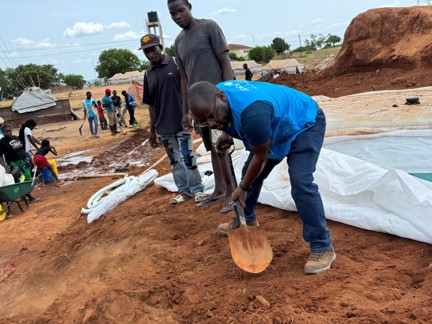
Figure 1: IHE Alumni Ziggy Kugedera who works with UNICEF Mozambique installing a water bladder working with volunteers in Chinhacanine Camp, Girja district
Emergency deployments are never easy. We worked under extremely hot conditions, coordinating logistics, mobilising volunteers, and responding to urgent needs within very limited timeframes. The camps were overcrowded, and expectations were high. Yet, despite the intensity and pressure, what kept me motivated each day were the smiles on the faces of children and women when basic services were restored. Those moments were powerful reminders that WASH is not just infrastructure but also about dignity, protection, and hope.
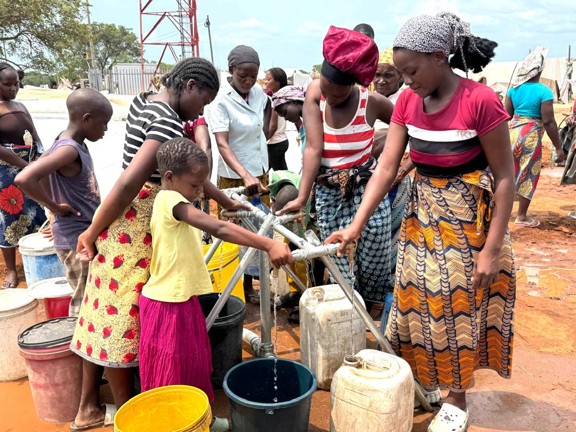
Figure 2: Women and children collecting water from a UNICEF bladder installed by Ziggy and his team at Chinhacanine Camp in Girja District
During the response, I directly applied the knowledge and technical skills I acquired during my Master’s programme at IHE Delft between 2018 AND 2019. The sanitation planning principles I studied guided the design and construction of emergency latrines that were safe, culturally appropriate, and responsive to the needs of women, children, and persons with disabilities. Site selection, pit lining considerations, drainage management, and safe distances from water points were all decisions informed by academic training.
Water supply interventions were equally critical. We coordinated the installation of water storage bladders within camps and organised water trucking operations to ensure a reliable supply of safe drinking water. Understanding hydraulic principles, water demand calculations, and storage requirements allowed us to plan efficiently and avoid shortages. What once seemed like theoretical classroom exercises became life-saving tools in the field.
Beyond infrastructure, behaviour change was essential. Overcrowded conditions significantly increase the risk of waterborne and hygiene-related diseases. Drawing from public health and behaviour change communication models studied during my master’s programme, we installed handwashing stations throughout the camps and worked closely with community volunteers to promote positive hygiene practices. Encouraging consistent handwashing, safe water handling, and proper latrine use required both technical understanding and community engagement skills.
One of the most valuable lessons from IHE Delft was learning to think systemically. In emergencies, solutions must be rapid, but they must also be sustainable and coordinated. Technical interventions cannot be implemented in isolation; they require collaboration with government authorities, community leaders, and humanitarian partners. The ability to analyse situations holistically and respond strategically was strengthened through my academic training.
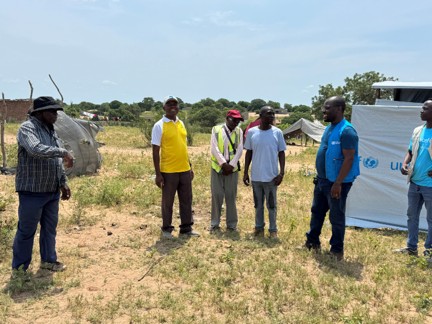
Figure 3: Ziggy Kugedera and local leadership discussing sanitation and hygiene after constructing temporary latrines in Chinhacanine camp in Girja
This deployment reinforced my belief that education is most meaningful when it serves those in crisis. The scholarship support I received during my master’s programme was more than financial assistance, it was an investment in resilience for vulnerable communities. The knowledge gained is now directly contributing to improving public health outcomes and preventing disease outbreaks in emergency settings.
Standing in the camps of Chókwè and Guijá, I realised that the program management concepts, emergency WASH, behaviour change, design standards, and public health frameworks I studied were no longer academic concepts. They were practical tools protecting families from disease and restoring dignity in displacement. From constructing emergency latrines to installing water bladders and promoting handwashing practices, every intervention represented the translation of knowledge into impact.
As humanitarian crises become more frequent and complex due to climate change and extreme weather events, investing in water and sanitation education is not optional but essential. My experience in Gaza Province reaffirmed that strong academic foundations combined with field commitment can make a tangible difference in the lives of vulnerable communities.
I remain deeply grateful for the opportunity to study at IHE Delft and for the continued partnership between academia and humanitarian practice. The journey from the classroom to the frontlines has shown me that when education meets service, lives are protected, dignity is restored, and hope is strengthened.
