Especialistas de seis países fortalecen sus capacidades técnicas en Guatemala previo al 40° Congreso Interamericano de Ingeniería Sanitaria y Ambiental

El curso precongreso “Avances en Saneamiento Urbano”, impulsado por AIDIS, la Global Sanitation Graduate School (GSGS) y AGISA, reunió a profesionales del sector hídrico de Latinoamérica. Durante tres días, expertos internacionales abordaron tecnologías de tratamiento de vanguardia, modelación matemática y normativas globales, culminando con una visita técnica a la PTAR Bellos Horizontes.
Con el objetivo de elevar los estándares técnicos y promover la transferencia de conocimiento de vanguardia en la región, culminó con éxito el curso precongreso “Avances en Saneamiento Urbano”. El programa formativo se desarrolló del 19 al 21 de noviembre en la capital guatemalteca, como antesala oficial al 40° Congreso Interamericano de Ingeniería Sanitaria y Ambiental – AIDIS 2026.
La capacitación, organizada a nivel local por la Asociación Guatemalteca de Ingeniería Sanitaria y Ambiental (AGISA), capítulo nacional de AIDIS, fue posible gracias a la alianza estratégica entre AIDIS y la GSGS. Esta colaboración internacional busca cerrar brechas técnicas, democratizar el acceso a la educación especializada y fomentar el intercambio de experiencias entre profesionales del sector agua y saneamiento.
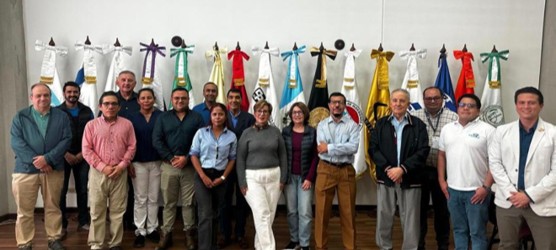
El programa se llevó a cabo en las instalaciones del Colegio de Profesionales de Guatemala y reunió a una veintena de especialistas provenientes de Brasil, Venezuela, Ecuador, Argentina, Uruguay y Guatemala, todos inscritos en el congreso continental.
El curso fue impartido por el Prof. Dr. Damir Brdjanovic, director de la GSGS y catedrático en IHE Delft Institute for Water Education y TU Delft (Países Bajos); y el Prof. Dr. Héctor García, director del Hub Regional para América Latina de la GSGS y docente en la Universidad Tecnológica de Uruguay (UTEC) e IHE Delft.
A lo largo de tres intensas jornadas, ambos expertos sintetizaron una década de evolución técnica y regulatoria, combinando rigor teórico, análisis de casos reales y trabajo en terreno.
El contenido curricular se diseñó para que los participantes dominaran desde la diferenciación entre aguas residuales y lodos sépticos/fecales, hasta la aplicación de modelos de tratamiento en todo el ciclo de vida de una planta:
- Modelación integrada: Los asistentes profundizaron en la caracterización de efluentes y los fundamentos de la modelación matemática mediante simuladores especializados (SIMBA, BioWIN y SUMO), cerrando con un ejercicio práctico que integró el sistema de alcantarillado, la planta de tratamiento y el cuerpo receptor.
- Normativa y tecnologías emergentes: La sesión se centró en las regulaciones globales vigentes sobre emisiones y descargas, seguida de demostraciones prácticas sobre tecnologías innovadoras de tratamiento, como MBR, AnMBR, MBBR y AGS, evaluando su viabilidad y adaptación al contexto latinoamericano.
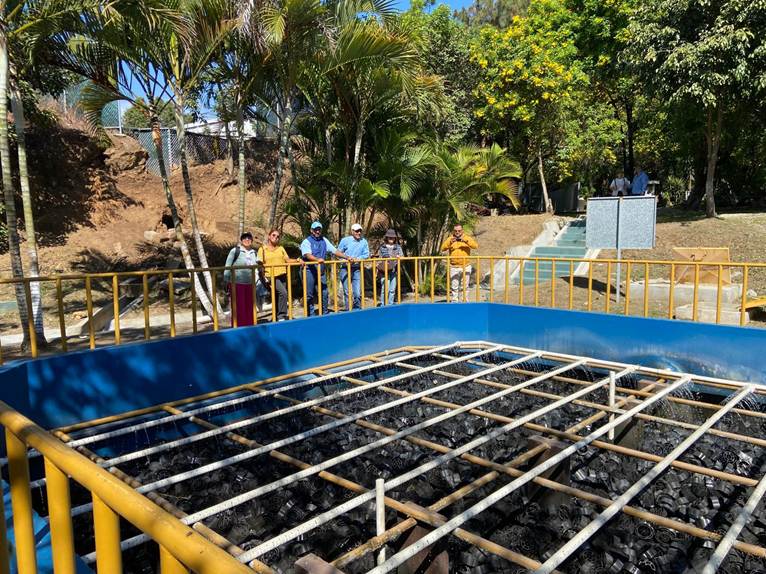
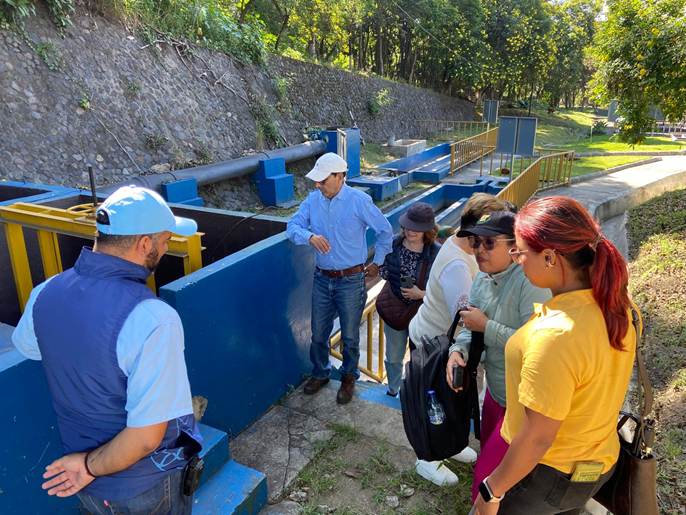
- Experiencia en campo: El cierre incluyó una visita técnica a la Planta de Tratamiento de Aguas Residuales (PTAR) Bellos Horizontes, ubicada en la zona 21 de la Ciudad de Guatemala y operada por la Empresa Municipal de Agua (EMPAGUA), permitiendo contrastar los conceptos estudiados con la operación local.
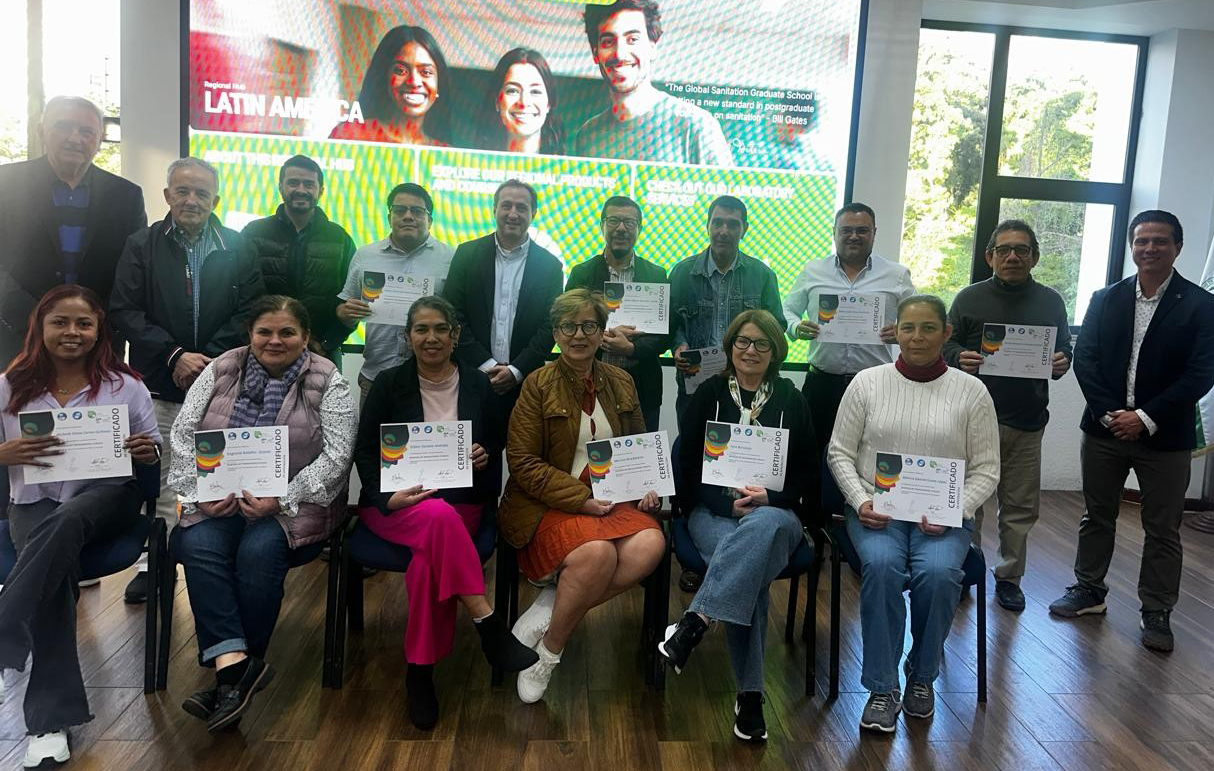
Al finalizar la visita técnica, se celebró una ceremonia de clausura encabezada por el presidente de AGISA, el Dr. David Aguilar Muñoz, en la que se hizo entrega oficial de los Certificados de Finalización avalados por AIDIS y la GSGS.
Sobre las organizaciones:
- AIDIS: La Asociación Interamericana de Ingeniería Sanitaria y Ambiental es una organización sin fines de lucro que agrupa a profesionales e instituciones dedicadas a la preservación del ambiente y el saneamiento básico en el continente americano.
- AGISA: Asociación Guatemalteca de Ingeniería Sanitaria y Ambiental, capítulo nacional de AIDIS en Guatemala.
- GSGS: La Global Sanitation Graduate School es una plataforma global liderada por IHE Delft que facilita el desarrollo de programas educativos de posgrado y capacitación continua en saneamiento en todo el mundo.
Specialists from six countries strengthen technical capacities in Guatemala ahead of the 40th Inter-American Congress of Sanitary and Environmental Engineering
- The pre-congress course “Advances in Urban Sanitation,” driven by AIDIS, the Global Sanitation Graduate School (GSGS), and AGISA, brought together water sector professionals from across Latin America.
- Over three days, international experts addressed cutting-edge treatment technologies, mathematical modelling, and global regulations, culminating in a technical field visit to the Bellos Horizontes WWTP.
Aiming to raise technical standards and promote the transfer of cutting-edge knowledge across the region, the pre-congress course “Advances in Urban Sanitation” concluded with great success. The training program took place from November 19 to 21 in the Guatemalan capital as an official prelude to the 40th Inter-American Congress of Sanitary and Environmental Engineering – AIDIS 2026.
Locally organized by the Guatemalan Association of Sanitary and Environmental Engineering (AGISA), the national chapter of AIDIS, the training was made possible through a strategic alliance between AIDIS and the GSGS. This international collaboration seeks to bridge technical gaps, democratize access to specialized education, and foster the exchange of experiences among professionals in the water and sanitation sector.
The program was hosted at the facilities of the Colegio de Profesionales de Guatemala and brought together around twenty specialists from Brazil, Venezuela, Ecuador, Argentina, Uruguay, and Guatemala, all registered participants of the continental congress.
The course was delivered by Prof. Dr. Damir Brdjanovic, Director of the GSGS and Professor at IHE Delft Institute for Water Education and TU Delft (Netherlands); and Prof. Dr. Héctor García, Director of the GSGS Regional Hub for Latin America and Professor at the Technological University of Uruguay (UTEC) and IHE Delft.
Over three intensive days, both experts synthesized a decade of technical and regulatory evolution, combining theoretical rigor, real-world case studies, and fieldwork.
The curriculum was designed to enable participants to master everything from distinguishing between wastewater and septic/faecal sludge to applying treatment models across a plant’s entire lifecycle:
- Integrated Modelling: Attendees delved into effluent characterization and the fundamentals of mathematical modelling using specialized simulators (SIMBA, BioWIN, and SUMO), closing with a practical exercise integrating the sewer system, treatment plant, and receiving water body.
- Regulations and Emerging Technologies: The session focused on current global regulations regarding emissions and discharge, followed by practical demonstrations of innovative treatment technologies, including MBR, AnMBR, MBBR, and AGS, evaluating their feasibility and adaptation to the Latin American context.
- Field Experience: The closing day featured a technical site visit to the Bellos Horizontes Wastewater Treatment Plant (WWTP), located in Zone 21 of Guatemala City and operated by the Municipal Water Company of Guatemala City (EMPAGUA), allowing participants to contrast the concepts studied with local operations.
Following the technical visit, a closing ceremony led by the President of AGISA, Dr. David Aguilar Muñoz, took place, during which attendees were officially awarded their Certificates of Completion endorsed by AIDIS and the GSGS.
About the organizations:
- AIDIS: The Inter-American Association of Sanitary and Environmental Engineering is a non-profit organization bringing together professionals and institutions dedicated to environmental preservation and basic sanitation across the Americas.
- AGISA: The Guatemalan Association of Sanitary and Environmental Engineering, the national chapter of AIDIS in Guatemala.
- GSGS: The Global Sanitation Graduate School is a global platform led by IHE Delft that facilitates the development of postgraduate educational programs and continuing training in sanitation worldwide.